Have you ever felt something so deeply that you just couldn’t find the words to explain it?
Perhaps your feelings were jumbled, overwhelming, or simply too complex to describe. This is something many people experience, especially in times of stress, grief, trauma, or change.
Creative therapy can offer a powerful and gentle way to explore those unspoken parts of ourselves.
Whether through art, writing, visualisation, movement, or metaphor, creative approaches can help us tap into emotions that live beneath the surface, those that we may not yet understand or feel ready to say out loud.
Why Words Sometimes Fall Short
Talking is often central to therapy, but sometimes, it’s just not enough.
You might:
- Not know where to begin
- Feel too overwhelmed or shut down to talk
- Struggle to name what you’re feeling
- Be stuck in old thought patterns or stories
- Have a history of trauma where talking feels unsafe or triggering
In these moments, creative therapy offers another language, one that communicates through image, symbol, and sensation. It allows us to bypass the logical mind and connect more directly with our emotions, inner child, or intuition.
What Is Creative Therapy?
Creative therapy doesn’t require any artistic skill. You don’t need to be a “creative person” to benefit.
It simply means using creative tools and techniques as part of the therapeutic process. These might include:
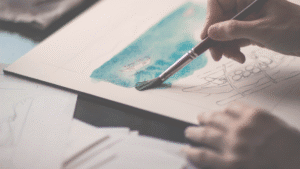
- Art-making (e.g., drawing, painting, collage)
- Using Russian dolls, figurines or puppets
- Visual journaling or free writing
- Sand tray work or object symbolism
- Guided imagery or visualisation
- Storytelling or metaphor
- Working with colour, movement, or sound
- Exploring using clay or play dough
These methods are led by your process, not a fixed outcome. The focus isn’t on making something “good,” but on discovering what emerges when you let go of the need for words or perfection.
The Transformational Power of Creative Expression
Creative therapy can be especially powerful for people who:
- Feel disconnected from their emotions or body
- Have experienced trauma or loss
- Are highly sensitive or neurodivergent
- Struggle with anxiety or perfectionism
- Want to access deeper insight, creativity, or healing
- Are young people or children who may not have the words to describe their emotions
When we express something creatively, we often surprise ourselves. A shape, colour, or image might reveal a truth we hadn’t fully seen. A piece of writing might give voice to a younger part of ourselves. A collage might capture the chaos or hope we couldn’t explain.
This process can bring a deep sense of relief, clarity, and emotional release.
Creativity in My Therapy Practice
In my work as a therapist, I integrate creative techniques gently and intuitively, always based on what feels right for you.
For some clients, creative work becomes a regular part of therapy. For others, it’s used occasionally, to explore something words can’t reach. There is no right or wrong way to engage with it.
It can be as simple as choosing colours that represent your mood. As powerful as creating a visual timeline of your life. Or as grounding as imagining a safe place through guided imagery.
Whatever the form, creative therapy honours your inner voice and makes space for what’s been waiting to be seen, felt, or expressed.
Ready to Explore?
If you’re curious about how creative therapy could support you on your therapeutic journey, I’d love to hear from you. You don’t have to be an artist. You just have to be open to exploring your story in a new way.
If you feel like you would like to have a chat, whether it’s about exploring what’s happening for you using creative methods, or if it’s just to ask some questions, please reach out by contacting me here.
